Felt & Membrane Calculator
Works for roofing felt, breathable membrane, self-adhesive underlays, and flat roof membranes
Minimum 150 mm for most membranes
Minimum 150 mm - check manufacturer spec
- enter roll dimensions above
Roof Slopes
10% standard; 15% for complex roofs with hips, valleys, or many penetrations
Job Costing (optional)
UK Market Prices
Fills in the material cost fields with current UK market prices. You can review and edit each price before applying.
Results
Total Roof Area
-
m²
Rolls to Order
-
inc. waste
Coverage per Roll
-
m² effective
Total Coverage
-
m² (ordered)
Slope Breakdown
| Slope | Eaves Length | Rafter Length | Area | Courses | Rolls |
|---|
🚫 Estimate waste & skip size for this project →
Doing this as a homeowner?
Who do you actually need to hire for this?
Not sure what some of these terms mean?
Browse all →
Frequently Asked Questions
How many rolls of roofing felt or breathable membrane do I need?
Net coverage = (roll width - overlap) x roll length. For a 1.5 m x 50 m roll with 150 mm overlap: (1.5 - 0.15) x 50 = 67.5 m² per roll. Divide your roof area by this figure and round up. Add 10-15% for waste at gables, eaves laps and complex details.
What is the difference between roofing felt and breathable membrane?
Traditional felt (Type 1F) is not vapour-permeable - requires a ventilation gap between felt and insulation. Breathable membrane (VPU) allows water vapour to pass through, reducing ventilation requirements. Under BS 5534 and current Building Regulations guidance, breathable membrane is now preferred as it allows close-coupled rafter insulation without a ventilation gap.
What overlap should I use for roofing felt and breathable membrane?
Breathable membrane: minimum 150 mm horizontal lap and 150 mm end lap. In exposed/high-wind zones: increase to 200 mm. Traditional bitumen felt: minimum 75 mm side laps. At eaves: overhangs into gutter by at least 50 mm. Always check the manufacturer's specific lap requirements.
Do I need roofing felt or membrane under roof tiles?
Yes - Approved Document C and BS 5534 require an underlay under all pitched roof tile and slate coverings. The underlay is a secondary defence against wind-driven rain and condensation, fixed horizontally from eaves to ridge with each course lapping over the one below. Without underlay, rain driven by wind can reach the roof structure.
What roofing felt or membrane should I use for a flat roof?
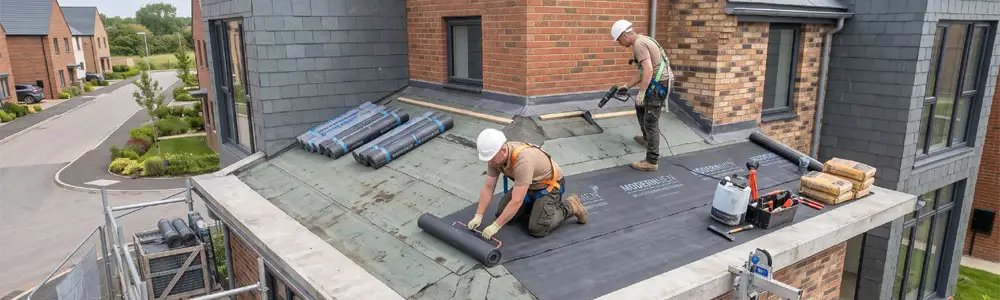
Flat roofs need a dedicated waterproofing system, not pitched roof underlay. Common systems include: torch-on bitumen felt, EPDM rubber membrane, GRP (fibreglass), and hot-melt systems. Under BS 6229, the surface must achieve a minimum 1:80 fall to prevent ponding. Use our flat roof joist calculator for flat roof projects.
What waste allowance should I use for roofing felt or membrane?
Straightforward gable roof: 10% waste. Roofs with hips, valleys, dormers, chimneys or skylights: 15%. Membrane rolls are difficult to handle in wind and some waste is inevitable. Always buy slightly more than calculated - returning an unopened roll is much easier than making a second trip for a small shortfall.