Render Board / Cement Board Calculator
Boards, fixings, jointing tape, and mesh for any cement board substrate
Common: 6, 9, 12, 15, 25 mm
- enter dimensions
Around board edges - typically 150 mm, min 15 mm from edge
Internal area - typically 300 mm centres
-
Alkali-resistant mesh tape is embedded into the basecoat over all board joints.
Typically 50-150 mm wide
10% standard; 15% for rooms with many cuts or irregular shapes
Wall / Area Sections
Job Costing (optional)
Stainless steel or hot-dip galvanised
~5-8 m² per litre depending on board porosity
UK Market PricesFills in the material cost fields with current UK market prices. You can review and edit each price before applying.
Results
Net Board Area
-
m² (less openings)
Boards to Order
-
inc. waste
Screws
-
total fixings
Jointing Tape
-
linear metres
Primer / Base Coat
-
litres (approx)
Board Type
-
-
Area Breakdown
| Area | Gross | Openings | Net | Boards | Screws | Tape (lm) |
|---|
🚫 Estimate waste & skip size for this project →
Doing this as a homeowner?
Who do you actually need to hire for this?
Not sure what some of these terms mean?
Browse all →
Frequently Asked Questions
How many render boards or cement boards do I need per square metre?
Divide wall area by the area of one board. A standard 1200 x 2400 mm board covers 2.88 m². 50 m² wall: 50 ÷ 2.88 = 17.4 boards, round up to 18, plus 10% waste = 20 boards. Complex elevations with many openings: use 15% waste.
What is render board used for?
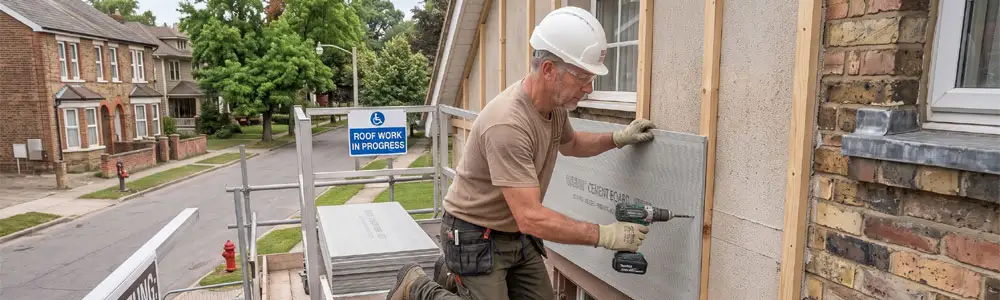
Cement render board provides a rigid, moisture-resistant substrate for external renders on timber frame and EWI systems, replacing traditional expanded metal lath. Also used internally as a tile backer board in wet areas (showers, baths). Common products: Hardiebacker, Wedi, Knauf Aquapanel.
What fixings do I need for cement board?
Use stainless steel or hot-dip galvanised screws with wafer or bugle head. To timber studs: 30-40 mm screws at max 200 mm centres perimeter, 300 mm field. To metal framing: self-drilling screws. Seal all screw heads with flexible sealant or primer before rendering or tiling.
Do I need to tape the joints in render board?
Yes - tape all joints with alkali-resistant fibreglass mesh tape bedded in flexible render or tile adhesive before applying the finish. Leave a 3 mm gap between boards for movement. Do not butt boards tightly together - the gap and tape prevent cracking along joints as boards move.
What render system should I use over cement board?
Use a polymer-modified thin-coat render system: basecoat over reinforcing mesh, then topcoat. Silicone render topcoat is most popular - flexible, breathable, and self-cleaning. Monocouche (one-coat through-coloured) also works over cement board. Avoid traditional sand-cement render - too rigid, will crack. Follow a single manufacturer's system specification throughout.
What waste allowance should I use for render board?
Simple rectangular wall: 10%. Complex shapes, gable ends, many openings: 15%. Plan your cutting layout - offcuts from large openings can often be reused elsewhere. Store boards flat and off the ground to prevent warping. Handle carefully - boards are brittle at edges before fixing.